
Is a Compact First Aid Kit for Car Worth It?
Last Updated: November 21, 2026
Quick Summary
Yes, a compact first aid kit for car use is worth it because most road injuries are minor and treatable at the roadside, and a kit small enough to live under a seat is actually there when you need it. Compact kits trim bulk, not essentials, so they handle common injuries well and buy you time to reach professional care.
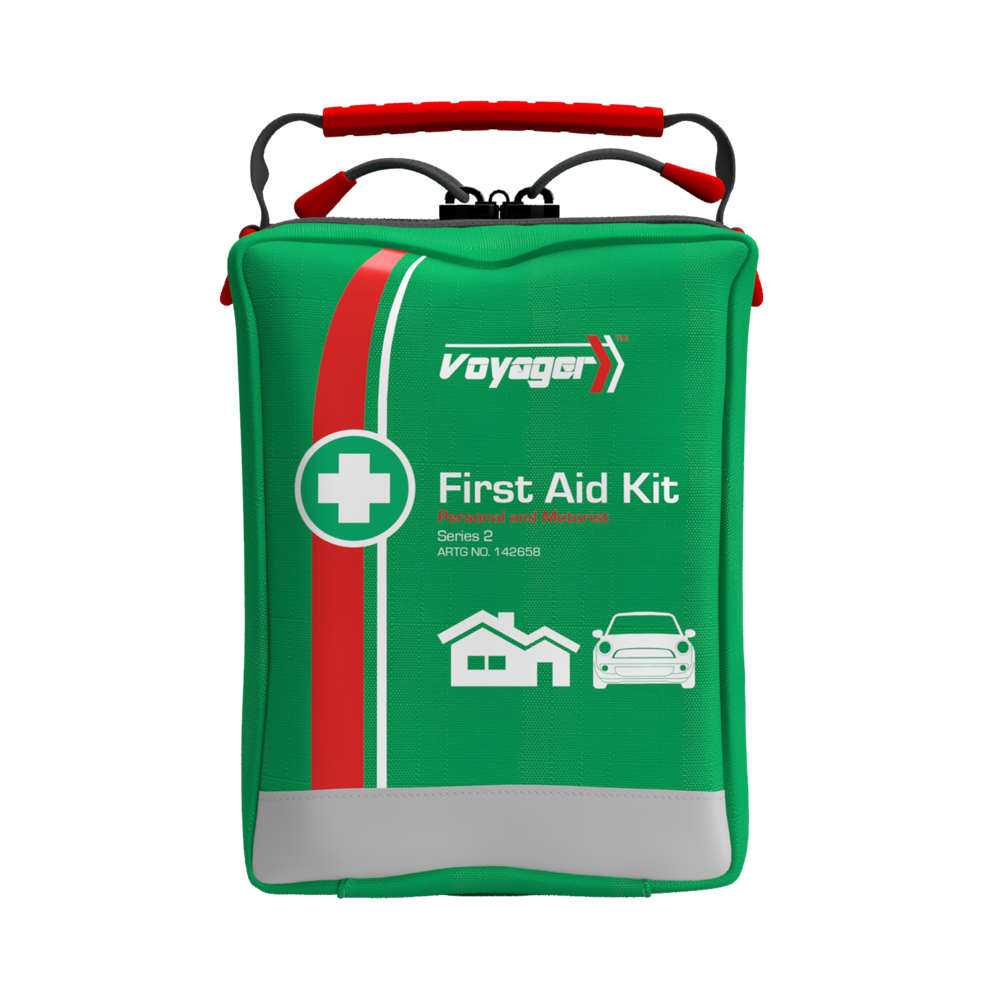
- A compact softpack in our range starts at $30.80 and fits a glove box or door pocket.
- Private cars have no general legal requirement to carry a first aid kit, but work vehicles do.
- Heat is the biggest threat to a car first aid kit, so store it out of direct sun.
- Check the kit every time you service the car or change the registration.
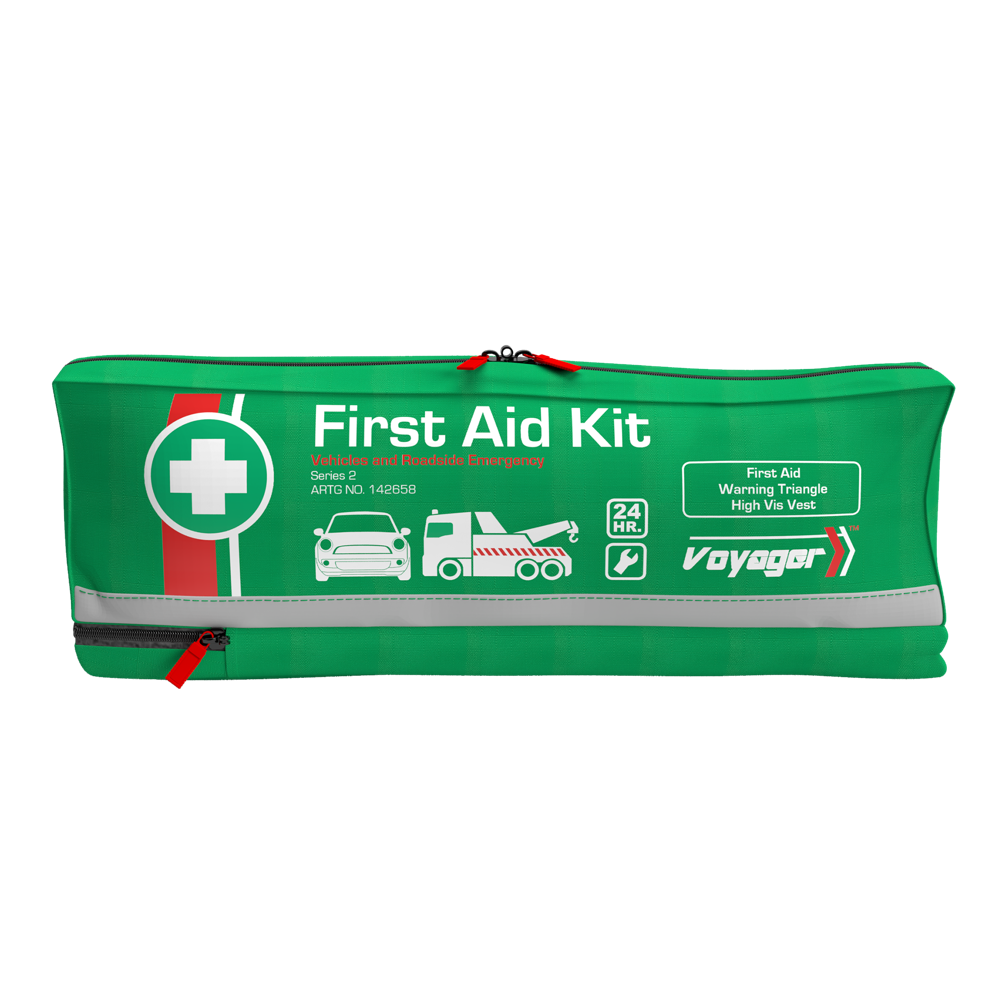
- The Voyager 2 Softpack Roadside kit at $59.99 adds warning equipment for highway touring.
Table of Contents
- Why a Compact First Aid Kit for Car Earns Its Space
- What to Put in a Car First Aid Kit
- The Best Car First Aid Kit Is the One You Actually Carry
- Vehicle First Aid Kit Requirements and What the Rules Expect
- Compact Versus Full-Size: A Cost and Value Comparison
- First Aid Kit Expiry Dates and Heat in the Vehicle
- Which Compact Kit Suits Your Vehicle and Driving Habits
- Equipping Your Vehicle From PFA Shop
- Frequently Asked Questions
Why a Compact First Aid Kit for Car Earns Its Space
The case for compact is stronger than most buyers expect. A kit in the boot that you have to unpack the shopping to reach is a kit you will not use in a hurry.
Below, we break down what belongs in a car kit, what compact versions leave out, how they compare on cost, and which of our kits suits which driver.
What to Put in a Car First Aid Kit
A car first aid kit should cover cuts, grazes, minor burns, eye irritation and shock, plus enough warning equipment to make a breakdown scene safer. That shorter list is why compact kits work.
The Non-Negotiable Contents
Every vehicle kit needs these essentials:
- Adhesive plasters in mixed sizes for small cuts
- Conforming bandages and non-adherent dressings for grazes and lacerations
- A triangular bandage for slings and support
- Cleansing wipes and antiseptic for wound care
- Nitrile gloves, because you cannot help anyone with bare hands
- A CPR face shield
- Burn gel or a burn dressing
- Eye wash ampoules for dust and grit
- Scissors, tape and safety pins
- A thermal emergency blanket for shock and cold
- High-visibility items and warning equipment for roadside safety
If you want a fuller checklist to compare against your own kit, our guide to the first aid supplies every kit needs walks through each item and why it matters.
What Compact Kits Leave Out
Compact kits trim volume, not essentials. What usually goes first is bulk: large trauma dressings, splints, cervical collars, extensive instrument sets and oversized cold packs. Those matter in serious trauma, but they are not what treats a scraped knee at school pickup or a cut finger at a roadside tyre change.
The trade-off is honest. A compact kit handles common injuries well and buys you time to reach professional care. It is not a substitute for emergency services in a serious crash.
The Best Car First Aid Kit Is the One You Actually Carry
The best car first aid kit is the one that is in the vehicle, in reach, and in date. That sounds obvious, but it is the single factor that separates a useful purchase from a wasted one.
A common pattern is that buyers purchase a large, comprehensive kit, store it in the boot under other gear, and never check it again.
Compact kits change that behaviour because they remove the friction. A kit that fits in a glove box, a door pocket or under a seat gets checked, restocked and used.
Three practical habits make the difference:
- Keep the kit where you can reach it from the driver's seat without getting out
- Check it every time you service the car or change the registration
- Replace anything you use straight away rather than at the next annual clean-out
Vehicle First Aid Kit Requirements and What the Rules Expect
Vehicle first aid kit requirements depend on what the vehicle is used for. For private cars, there is no general legal requirement to carry a first aid kit. For workplaces, the picture is different.
Practical expectations for a work vehicle kit usually include:
- A kit appropriate to the number of workers and the risk level of the work
- Restocking and expiry monitoring as part of the first aid program
- A trained first aider where risk assessment identifies the need
- Clear information for workers about where the kit is and how to use it
If your vehicle is a fleet car, a pool car or a trades ute, treat the kit as part of your safety system rather than an accessory. If it is your own family car, a kit is voluntary but still worth carrying.
Compact Versus Full-Size: A Cost and Value Comparison
The honest comparison is not compact versus full-size on item count.
Start with the three costs that matter:
- Purchase cost. A compact softpack in our range starts at $30.80. The gap buys more contents, but only if those contents match your likely injuries.
- Storage cost. A full-size kit occupies boot space you may already be using for prams, tools or shopping. A compact kit at roughly 10 x 8 x 13.5cm fits a glove box or door pocket, which is storage you have already paid for.
- Replacement cost. Every item expires. A larger kit with more dated stock costs more to maintain each year, and unused stock is the most common form of waste we see.
A practical way to judge value is cost per item you would realistically use.
That does not make full-size kits poor value.
The contents audit matters as much as the price.
| Kit | Price | Size | Best For | Key Trade-off |
|---|---|---|---|---|
| Voyager 2 Softpack Versatile | $30.80 | 10 x 8 x 13.5cm | Glove box, everyday driving | Fewer contents than a full-size kit |
| Voyager 2 Plastic Waterproof | $39.99 | 13 x 21 x 7.5cm | Heat, spills, damp storage | Hard case takes more room |
| Voyager 2 Plastic Neat | $39.99 | 17.5 x 7 x 19cm | Family cars, caravans | Bulkier than a softpack |
| Defender 3 Softpack Versatile | $54.99 | 13 x 9 x 19.5cm | Home and vehicle combined | Larger footprint |
| Voyager 2 Softpack Roadside | $59.99 | 44 x 6 x 16cm | Roadside emergencies | Long shape suits boots, not glove boxes |
Price
The value question is not which kit has the most items. It is which kit you will keep stocked and in reach.
For drivers who want the roadside warning equipment as well as medical supplies, the Voyager 2 Series Softpack Roadside First Aid Kit adds visibility items to the medical contents, which is the closest thing to a full-size roadside setup in a slim format.
Watch out: comparing kits on total item count alone rewards box-filling.
First Aid Kit Expiry Dates and Heat in the Vehicle
Heat is the biggest threat to a car first aid kit.
That does not mean car kits are a bad idea. It means storage and checking matter.
What to watch:
- Adhesive plasters lose grip once the glue softens and re-sets repeatedly
- Sterile packaging can degrade, so the contents are no longer sterile
- Burn gel and eye wash are dated and should be replaced on schedule
- Softpack versus hard case matters, since a rigid case shields contents from knocks and dust better
Store the kit out of direct sun. If you want a practical system for tracking dates, our article on how to track first aid expiry dates covers labelling, reminders and rotation.
Watch out: restocking only the items you used and leaving the rest untouched lets expired stock accumulate quietly. Check every item against its date, not just the ones that look worn.
Which Compact Kit Suits Your Vehicle and Driving Habits
Match the kit to the vehicle and the trip, not to the shelf.
Use these use-case profiles as a decision framework:
- Daily commuter or small hatchback. Storage is tight and the likely injuries are minor cuts, grazes and eye irritation. The Voyager 2 Series Softpack Versatile First Aid Kit at $30.80 is the practical pick. At 10 x 8 x 13.5cm it fits a glove box or door pocket, and the softpack handle makes it easy to grab.
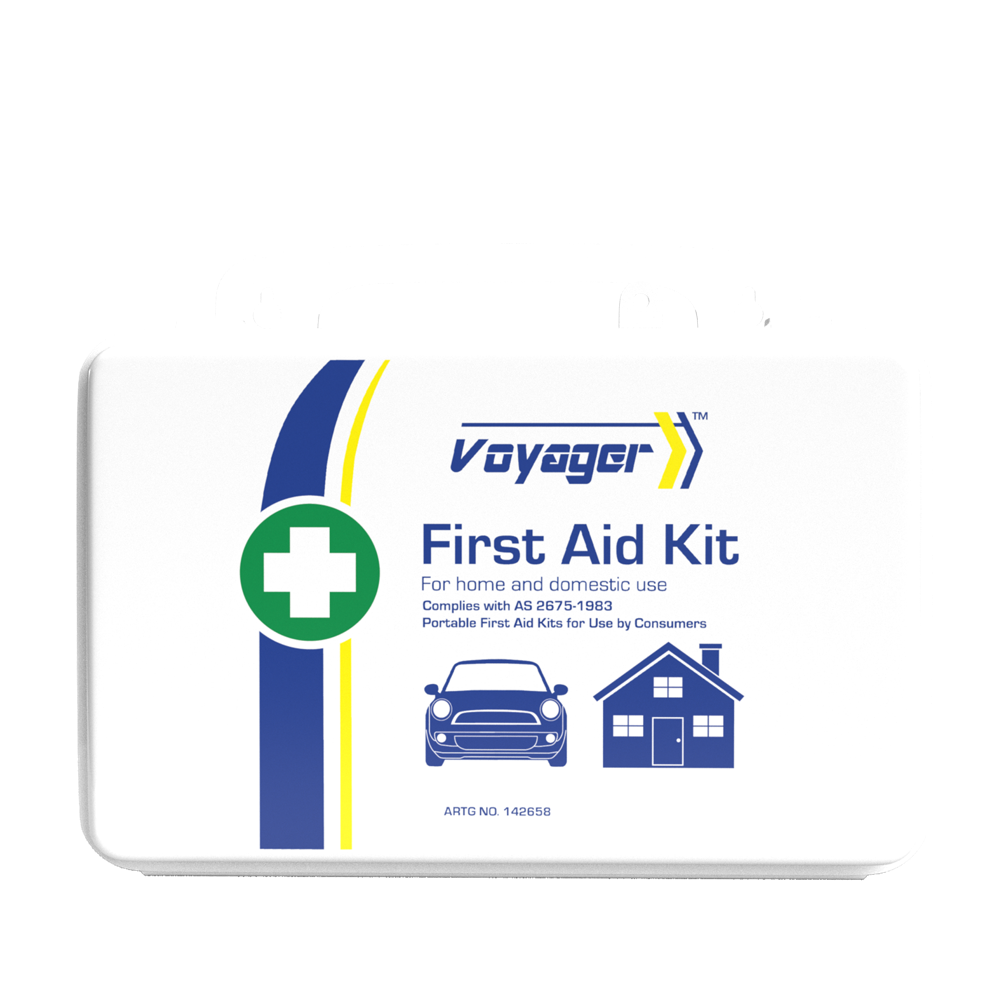
- Family car with children and sports gear. Spills, damp and heat are the main threats, and the kit needs to survive a boot full of equipment. The Voyager 2 Series Plastic Waterproof First Aid Kit at $39.99 is the better choice. The rigid case shields contents from dust and splashes, and it is listed on the Australian Register of Therapeutic Goods (ARTG No. 142658).
- Caravan, family wagon or mixed home-and-car use. You want more contents without a full-size footprint. The Defender 3 Series Softpack at $54.99 gives more contents in a case that still stores under a seat.
- Rideshare or passenger-carrying driver. You cannot predict what a passenger will need, so prioritise a kit with clear contents, gloves and a CPR face shield, and check it more often because it is handled by others.
- Remote or highway tourer. Medical supplies alone are not enough. You need warning equipment in the same kit, which is where the Voyager 2 Series Softpack Roadside First Aid Kit at $59.99 earns its place. Its 44 x 6 x 16cm shape suits a boot rather than a glove box.
- Trades ute or fleet vehicle. Treat the kit as part of your work health and safety system rather than an accessory, and size it to the number of workers and the risk level of the work.
Best for: daily drivers and family cars where the kit must be reachable from the driver's seat. Skip if: you do a lot of remote or highway touring and want warning equipment in the same kit.
Watch out: buying a kit that fits the vehicle but not the driver's habits is the most common mismatch.
Equipping Your Vehicle From PFA Shop
The question of whether a compact first aid kit for car use is worth it has a straightforward answer: yes, provided it is the right compact kit and it stays in the vehicle.
At PFA Shop, we supply first aid kits and emergency equipment for drivers, families, workplaces and marine use, including specialised kits and professional-grade supplies.
Three things worth knowing about our range:
- Specialised kits for specific needs, including roadside configurations
- Professional-grade medical supplies and equipment
Get started with PFA Shop and put a kit in the car this week, then check it on the same day each year.
Frequently Asked Questions
Is it worth keeping a first aid kit in your car?
For most drivers, yes. A compact first aid kit gives you dressings, bandages, gloves and wipes within reach when a cut, graze or burn happens away from home, which is exactly when you have no access to your household supplies. The main condition is that the kit stays in the vehicle and is checked regularly. A kit that sits in the boot for five years with expired dressings is worth very little, so factor in a twice-yearly contents check when you weigh up the cost.
What should a compact car first aid kit contain?
A useful compact kit covers minor injuries and protects the responder. The Voyager 2 Series Plastic Waterproof First Aid Kit, for example, includes plasters, conforming bandages, non-adherent dressings, cleansing wipes, eye wash and burn gel in a 13 x 21 x 7.5 cm case.
Are first aid kits compulsory in cars?
Private passenger vehicles are not required to carry a first aid kit under general road rules. Workplace vehicles are different, because work health and safety duties apply to first aid equipment and facilities. If your vehicle is a work vehicle, a trades ute or a fleet car, check your first aid risk assessment rather than assuming the private-car position applies.
How often should you check or replace a car first aid kit?
Restock anything used straight away. Heat is the main threat in a vehicle, so inspect items stored in the boot or on a parcel shelf more often in summer. Replace anything past its expiry date. Keep a written contents list inside the case so you can see at a glance what has gone missing between checks.
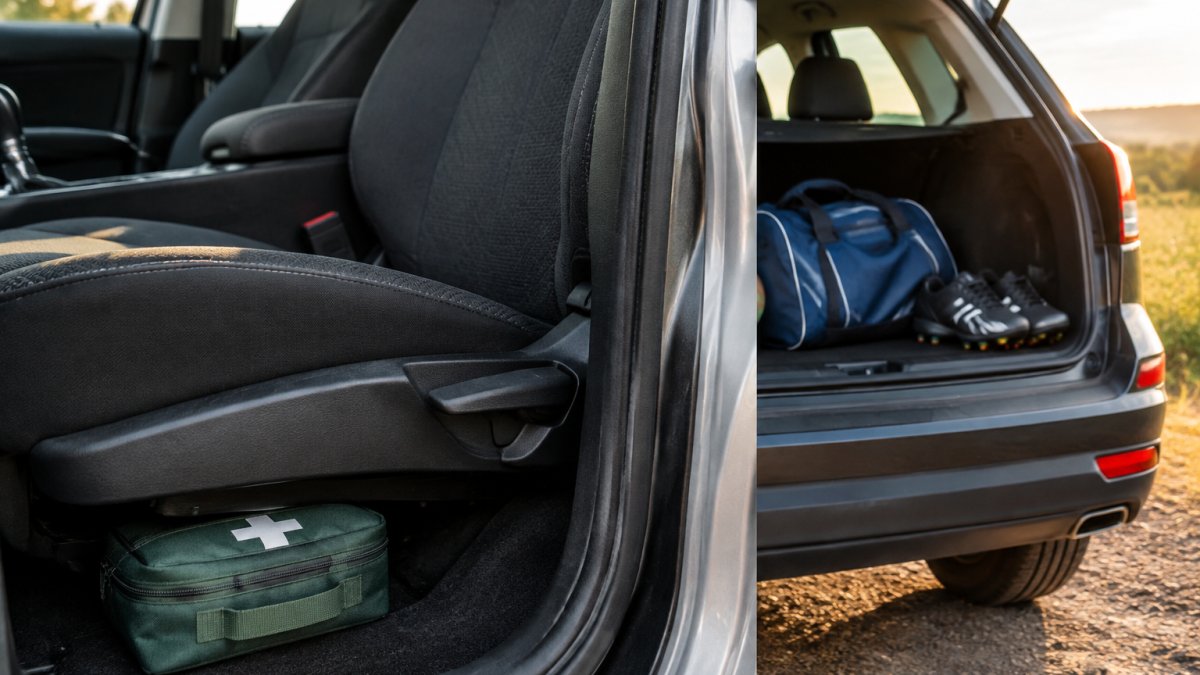
Where should you store a first aid kit in your car?
Store it where you can reach it without leaving the driver's seat or stepping into traffic. Under the front passenger seat, in a boot organiser or behind a utility seat all work, provided the kit is secured so it does not become a projectile in a crash. Avoid the parcel shelf, where sun exposure degrades dressings fastest. A slim softpack such as the Voyager 2 Series Roadside kit, at 44 x 6 x 16 cm, is shaped for exactly these narrow spaces.
