
How to Build a Food Industry First Aid Kit That Works
Last Updated: November 12, 2026
Quick Summary
A food industry first aid kit is built around kitchen and food production risks such as cuts, burns, eye splashes and slips, rather than general home use. It should include waterproof and blue detectable dressings, burn and eye care supplies, and be placed close to the work area so staff can reach it within seconds.
- Blue detectable dressings are required in food handling areas so a lost dressing can be spotted in product.
- Check the kit at the start of every week and replace used or expired items the same day.
- Make sure at least one trained first aider is on every shift.
- Store eye wash at eye level near places where splashes are most likely.
- Cool a minor burn under cool running water before applying a dressing.
Table of Contents
- Why Food and Beverage Workplaces Need a Dedicated First Aid Kit
- Assessing Your Kit Needs by Workplace Size, Hazards and Staffing
- Wound Care Supplies: Dressings, Gauze and Bandages
- Blue Detectable Dressings and Foreign-Object Contamination Controls
- Burn, Eye and Antiseptic Supplies for Kitchen and Service Injuries
- Checking, Restocking and Placing Your Kit Across Work Areas
- Building a Workplace First Aid Kit Checklist and Training Plan
- Choosing Your Food Industry Kit: Next Steps for Your Workplace
- Frequently Asked Questions
Why Food and Beverage Workplaces Need a Dedicated First Aid Kit
Essential items for a food and beverage industry first aid kit go well beyond a general home kit, because the risks are different. Kitchens, bars and food production lines bring hot surfaces, sharp knives, cleaning chemicals and constant handwashing into one busy space. A dedicated kit is built around those specific risks.
Food handling adds a hygiene problem that most workplaces do not face. Any dressing used near food must be easy to spot if it falls off, which is why visually distinct dressings matter so much. Safe Work Australia guidance on workplace first aid
Here is what a dedicated food industry kit should help with:
- Cuts from knives, slicers and broken glassware
- Burns from ovens, fryers, grills and hot liquids
- Eye irritation from splashes of cleaning products or food particles
- Slips and minor strains on wet floors and during heavy lifting
Staff should never have to search a general office cupboard during an incident. A kit placed close to the work area gets used faster and treats injuries sooner.
Assessing Your Kit Needs by Workplace Size, Hazards and Staffing
Start by listing the hazards in your workplace. A small cafe with two staff has different needs from a food plant with a hundred workers on rotating shifts.
Ask a few simple questions:
- How many people work each shift?
- Which tasks carry the highest injury risk?
- Where do staff handle hot oil, knives or chemicals?
- How far is the nearest first aid point from the work area?
Larger sites usually need more kits and more copies of key items. Spread kits across kitchens, packing areas and service zones so nobody has to walk far during an emergency. Review your list every few months, since menus, equipment and staffing levels change.
Wound Care Supplies: Dressings, Gauze and Bandages
Wound care forms the core of most food industry kits, but the selection logic differs from a general workplace kit. Kitchens and production lines combine wet hands, hot surfaces and constant handwashing, so a dressing that lifts at the edges is both a poor injury cover and a foreign-object risk.
Stock a range of sizes and formats so you can cover a fingertip cut or a larger graze without improvising:
- Waterproof adhesive dressings in several sizes
- Blue detectable adhesive dressings for any wound in a food handling area (see the next section)
- Sterile gauze pads for larger wounds and for cleaning around a wound
- Conforming bandages to hold dressings in place on hands, wrists and forearms
- Non-stick dressings for wounds that might stick, such as grazes or blisters
- Medical tape for securing dressings, preferably a paper or hypoallergenic tape
- Sterile saline for irrigating a wound before dressing
A common mistake in any food industry first aid kit is buying only small plasters. Kitchen injuries often involve fingers, hands and palms, which need reliable coverage that stays on through wet work. Choose dressings suited to wet work, and check that the adhesive holds when hands are frequently wet.
Watch out: a dressing that lifts during food preparation can end up in product. If a dressing becomes loose, stop the task, replace it and check the work area before continuing.
Match quantities to staffing and shift patterns rather than buying a single fixed pack. A small cafe may need a handful of each size per kit, while a multi-shift production site needs enough to restock between shifts without a same-day order. Keep the wound care items together in the kit so a responder is not searching across compartments during an incident.
Blue Detectable Dressings and Foreign-Object Contamination Controls
In food environments, a dressing that falls into a product can cause serious contamination and a costly recall. Blue detectable dressings address this by making a lost dressing easier to spot during inspection.
Blue is used because it rarely occurs naturally in food, so a blue fragment stands out during inspection.
Food-safety controls matter here too:
- Use only blue detectable dressings in food handling areas, and keep general coloured dressings out of those zones entirely
- Store spare dressings in sealed packs in a clean, dry location away from food contact surfaces
- Check dressings at the start of each shift for tears, lifting edges or missing pieces
- Record any dressing that was lost or found in product, including the time, area and action taken
- Quarantine any product that may contain a lost dressing until it has been inspected
Staff should report any dressing that falls off during a shift immediately, and the area should be checked before work resumes. Good reporting protects both the worker and the customer, and it gives the business a record if a customer complaint or audit follows.
Keep a written log of dressing issues and replacements so recurring problems can be spotted.
Burn, Eye and Antiseptic Supplies for Kitchen and Service Injuries
Burns and splashes are among the most common incidents in food service. Keep supplies ready for both.
- Burn dressings and gel for cooling and covering minor burns
- Eye wash for chemical or food splashes
- Antiseptic wipes or spray for cleaning minor wounds before dressing
- Disposable gloves for handling injuries safely
Cool a minor burn under cool running water before applying a dressing. Eye wash should be stored at eye level near the place where splashes are most likely.
The article lists the supplies that cover the most common food service incidents.
| Item | Used for | Key note |
|---|---|---|
| Burn dressings and gel | Minor burns | Cool under running water first |
| Eye wash | Chemical or food splashes | Store at eye level near splash risk |
| Antiseptic wipes or spray | Cleaning minor wounds | Use before dressing |
| Disposable gloves | Handling injuries safely | Protects responder and casualty |
Checking, Restocking and Placing Your Kit Across Work Areas
A kit only works if its contents are current and complete. Check it on a fixed schedule and write the date on a checklist inside the lid.
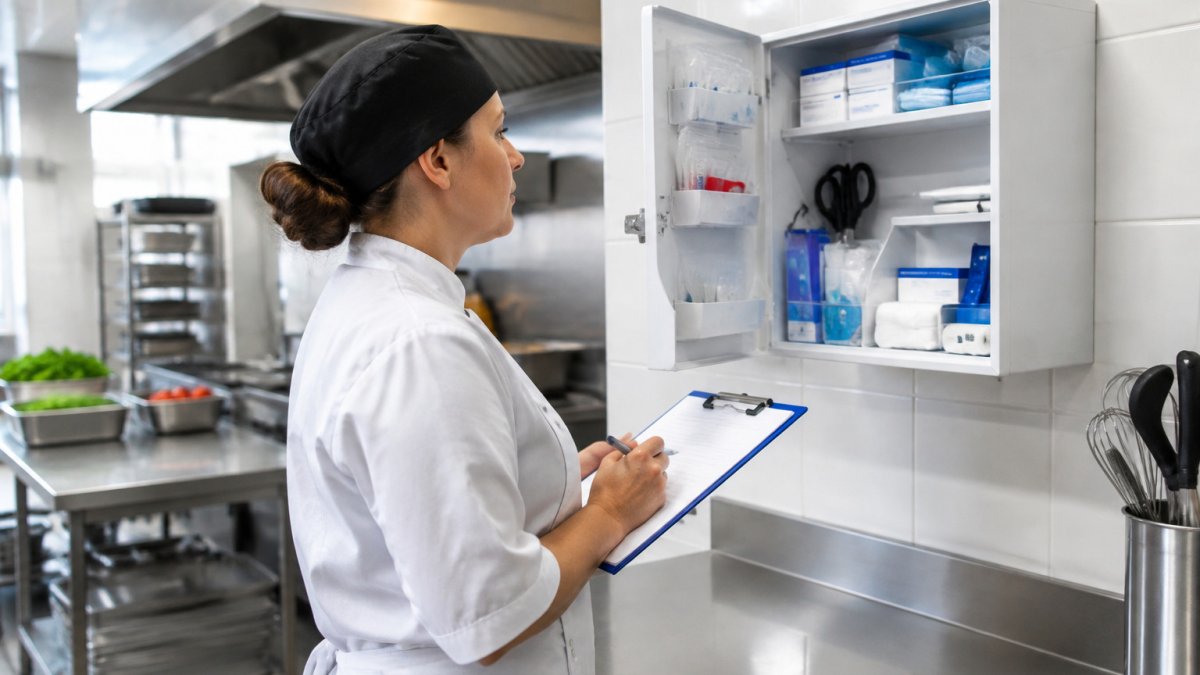
Watch out: check expiry dates on eye wash and antiseptic regularly.
Consider these steps:
- Check the kit at the start of every week, and see guidance on keeping workplace first aid kits in good condition.
- Replace any used or expired items the same day
- Confirm the kit is mounted in a visible, unlocked location
- Keep a backup kit in larger sites
Place kits where staff can reach them within a few seconds. Avoid storing them above food prep areas or next to chemical stores.
Building a Workplace First Aid Kit Checklist and Training Plan
A written checklist keeps the kit consistent over time. List each item, the quantity and the expiry date, and tick it off during each inspection.
Training matters as much as supplies. Make sure at least one trained first aider is on every shift. Staff should also know:
- Where each kit is located
- How to call for help and who to notify
- When to escalate an injury to a doctor or emergency services
- How to report a dressing lost in product
Run a short refresher on kit locations at least once a year.
Choosing Your Food Industry Kit: Next Steps for Your Workplace
Once you know your hazards and staffing, the next step is choosing kits that match them. Consider these options from our range:
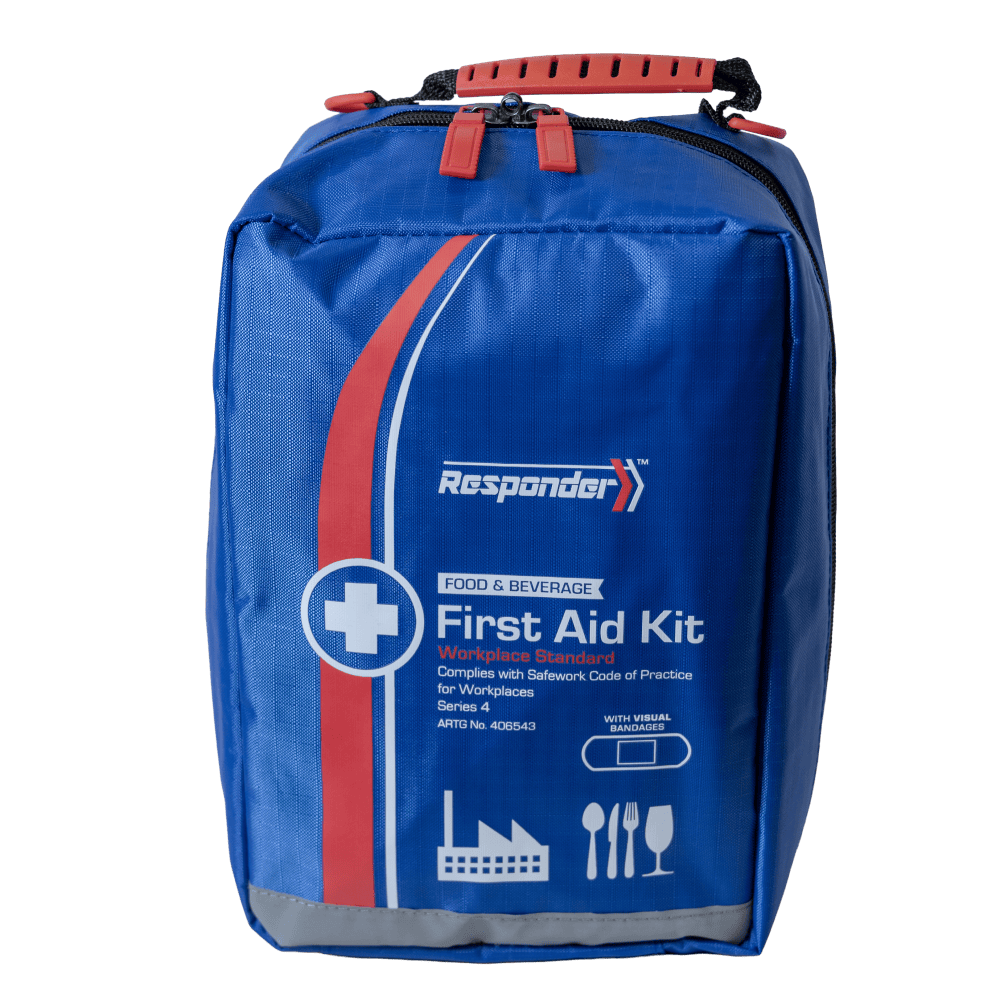
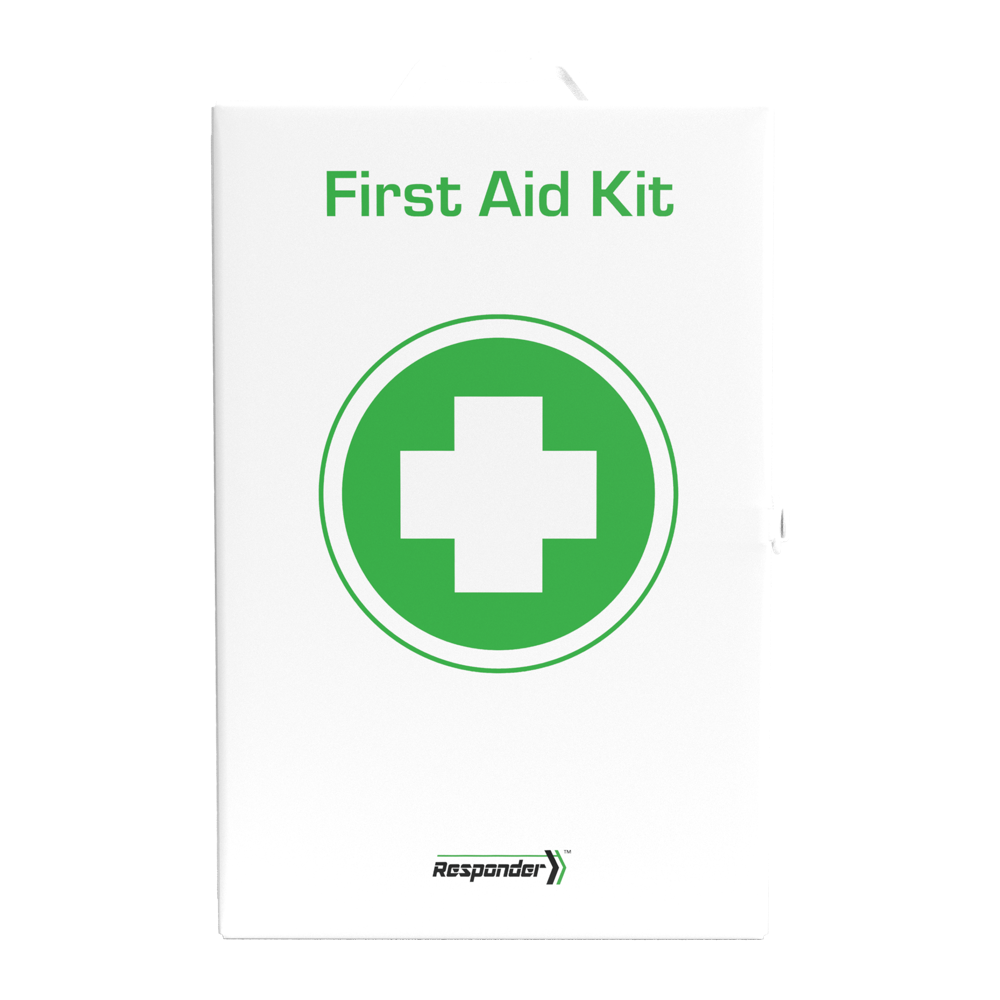
- RESPONDER 4 Series Metal Tough Food & Beverage Kit 24.5 x 12 x 38.5cm at $174.99, a metal-cased kit for food and beverage workplaces.
- OPERATOR 5 Series Metal Tough Food & Beverage 42 x 28.5 x 13cm at $229.99, a metal-cased kit for food and beverage workplaces.
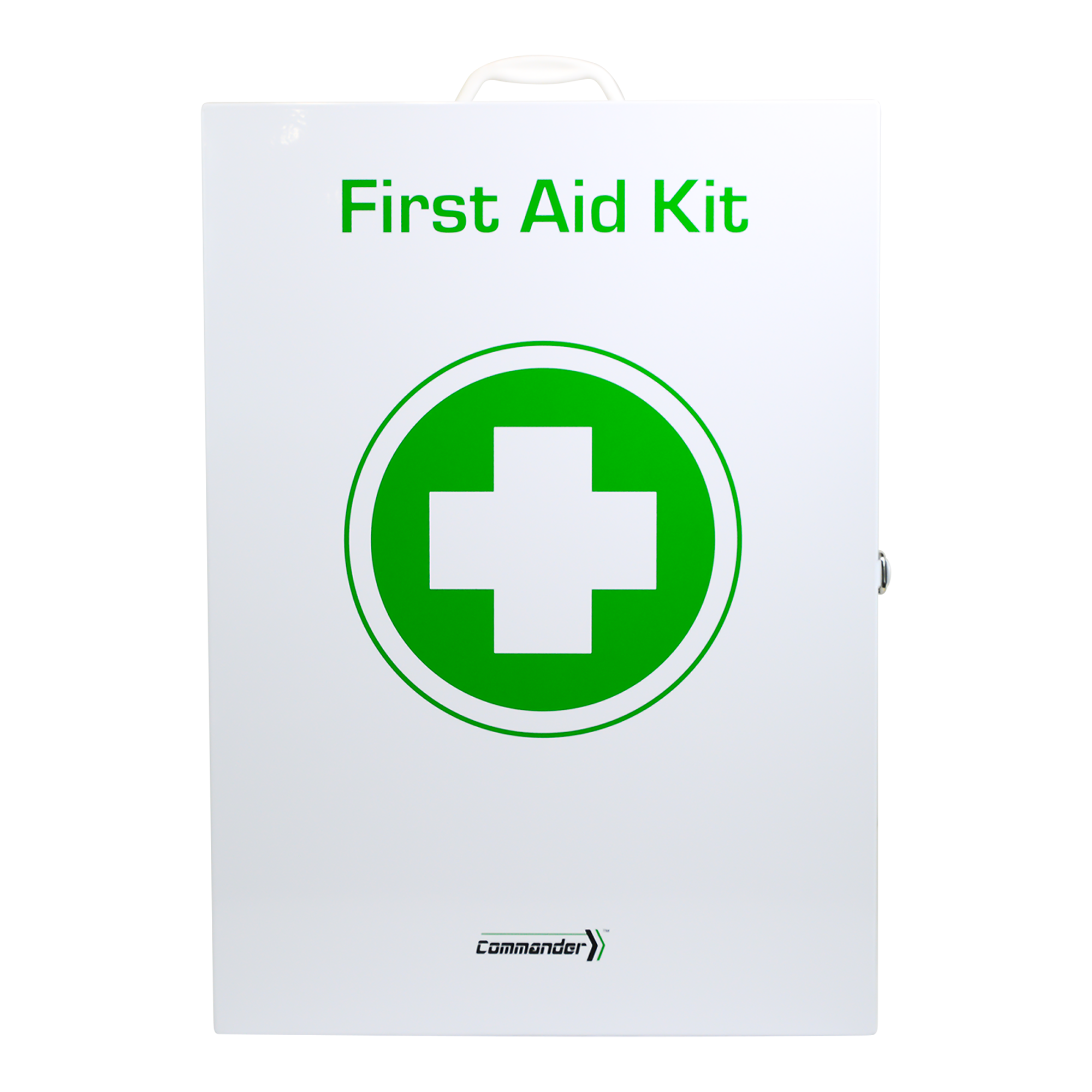
- COMMANDER 6 Series Metal Tough Food & Beverage Kit 41.5 x 13 x 58cm at $364.35, a metal-cased kit for food and beverage workplaces.
- RESPONDER 4 Series Softpack Versatile Food & Beverage Kit 24.5 x 15.5 x 10cm at $109.99, a soft, portable kit for food and beverage environments.
Check your local requirements with the work health and safety regulator in your state or territory, as obligations vary by jurisdiction.
Frequently Asked Questions
What should be in a food and beverage industry first aid kit?
A food and beverage first aid kit should cover the injuries that commonly happen in kitchens and service areas: cuts from knives and glassware, minor burns from hot surfaces and oil, and eye irritation from cleaning chemicals. Core contents include sterile adhesive bandages, blue detectable dressings, sterile gauze pads, a gauze roller bandage, medical tape, antiseptic wipes or spray, burn dressings, eye wash, disposable gloves, scissors and a CPR face shield. Choose contents based on the hazards in your own workplace rather than buying a generic pre-packed kit and assuming it is complete.
Why do food businesses use blue detectable dressings?
Blue detectable dressings are visible against most food, so any dressing that falls into a product can be seen and removed before it reaches a customer. This matters because a lost dressing is a foreign-object contamination risk. Use blue dressings in any area where food is prepared, packed or served, and make sure staff know to report and replace any dressing that is lifted, torn or dislodged.
How often should a food industry first aid kit be checked?
Inspect the kit at least monthly, and check it after any incident that uses supplies. Look for expired items, damaged packaging, missing contents and dressings that have been opened. Record each check with the date and the name of the person who completed it.
Does a small food business need a larger first aid kit?
Not always, but the kit should match the number of staff and the hazards present. A small cafe with a few staff may need one well-stocked kit at the food preparation area, while a larger production site needs kits placed across kitchens, packing lines and service areas. Assess how many people work each shift, how far they are from the nearest kit, and which tasks carry the highest risk, then adjust the quantities of dressings, burn supplies and eye wash to suit.
