
Best Bleed Control Kit Components: 2026 Guide
Table of Contents
- What to Look for in the Best Bleed Control Kit Components
- Tourniquets: The Component That Stops Limb Bleeding Fast
- Haemostatic Gauze and Dressings: Combat Gauze, EMS Dressing and EMS Roll
- Compression Bandages, Shears, Gloves and Markers
- A Bleeding Control Kit Checklist by Kit Size
- How to Use a Bleed Control Kit Under Pressure
- Choosing an Emergency Trauma Kit for Home
- Bleed Control Kit for Events and High-Risk Workplaces
- Frequently Asked Questions
Last Updated: October 17, 2026
What to Look for in the Best Bleed Control Kit Components
The best bleed control kit components are the ones you can find, open and apply under extreme stress, with shaking hands and no time to read instructions. This guide from PFA Shop breaks down every component that matters, what each one does, and how to judge quality before you buy.

Severe bleeding kills fast, and the window to act is measured in minutes. That is why a bleed control kit is not just another first aid box. It is a purpose-built trauma response system, and the components inside it decide whether it works.
Below, we cover the exact components worth paying for, how kit size changes the checklist, and how to use the kit when your hands are not cooperating.
Tourniquets: The Component That Stops Limb Bleeding Fast
A tourniquet is the single most important component in any bleed control kit. It stops catastrophic limb bleeding when direct pressure fails, and it buys the time needed for emergency services to arrive.

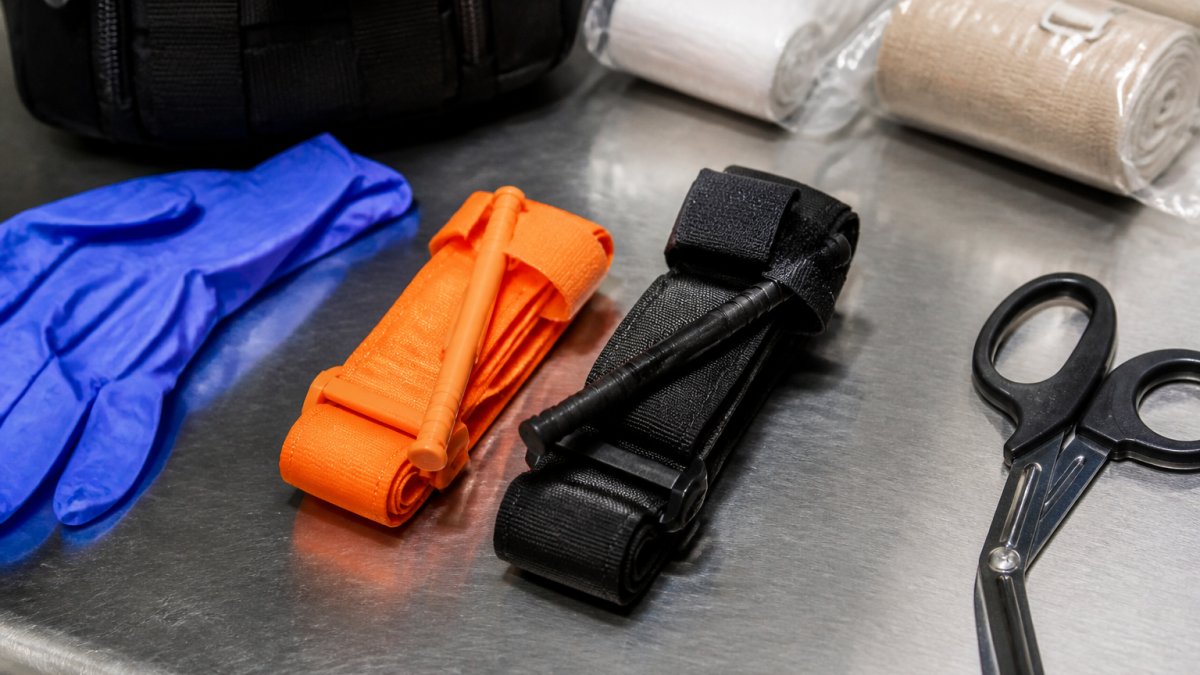
Two designs dominate our shelves. The RAPIDSTOP Civilian Tourniquet Orange ($64.99) uses a wide pull-strap and precision ratcheting buckle, built for rapid one-hand self-application. The C.A.T Tourniquet G7 ($89.99) from North American Rescue adds a wider strap, a retention assist for repositioning without releasing the windlass, and a red tip for low-light visibility.
When judging a tourniquet, check three things: one-handed operation, a windlass that locks securely, and clear marking of application time. A windlass that slips under load is a failure point, not a minor annoyance.
Haemostatic Gauze and Dressings: Combat Gauze, EMS Dressing and EMS Roll
Haemostatic dressings are the components that stop bleeding in junctions and cavities where a tourniquet cannot reach. They come in three formats, and each suits a different wound profile.
QuikClot Combat Gauze is a haemostatic gauze designed for packing deep wounds, and it pairs with firm sustained pressure. The QuikClot EMS Dressing is a 4x4 haemostatic dressing suited to wounds where direct pressure is the primary control method. The QuikClot EMS Roll is rolled gauze built for efficient wound packing when rapid control is required.
How do you evaluate them? Look at the format first, then the packaging. A dressing you cannot tear open with gloved hands is useless, and a gauze that will not hold its shape during packing will not reach the bleeding source.
Our RAPIDSTOP Medium Bleed Control Pack with QUIKCLOT Combat Gauze ($219.99) combines Combat Gauze with a RapidStop tourniquet, trauma bandage, shears, gloves and marker. The RAPIDSTOP Small Bleed Control Pack with QUIKCLOT EMS Roll ($139.99) offers the same workflow in a stowable footprint.
Compression Bandages, Shears, Gloves and Markers
The supporting components in a bleed control kit are unglamorous and absolutely non-negotiable. Skip them and the primary tools become harder to use when seconds matter.
- Trauma compression bandage: applies firm, stable pressure over limb and body wounds, and holds dressings in place after packing.
- Universal shears: cut clothing, webbing and seatbelts to expose the injury site quickly.
- Nitrile examination gloves: maintain hygiene and protect the responder during care.
- Fine-tip marker: records critical time information for clinical handover.
Evaluate shears on cutting action with gloves on, not on how they look in the pouch. Evaluate gloves on fit and tear resistance. Evaluate the marker on whether it writes on tourniquet webbing and skin, because many do not.
A Bleeding Control Kit Checklist by Kit Size
Kit size should follow risk and access, not budget alone. A small pack that fits a glovebox beats a large pack locked in a cupboard.
Kit size |
Core contents |
Best placement |
PFA Shop option |
Price |
|---|---|---|---|---|
Small, no haemostatic |
Tourniquet, trauma bandage, shears, gloves, marker |
Vehicle, site bag, wall station |
RAPIDSTOP Small Bleed Control Pack |
$89.99 |
Small, with dressing |
Above plus QuikClot EMS Dressing or EMS Roll |
Vehicle, individual carry |
RAPIDSTOP Small with QUIKCLOT EMS Dressing |
$149.99 |
Small, with Combat Gauze |
Above plus QuikClot Combat Gauze |
Remote work, high-risk tasks |
RAPIDSTOP Small with QUIKCLOT Combat Gauze |
$179.99 |
Medium, no haemostatic |
Tourniquet, trauma bandage, shears, gloves, marker |
Workplace wall mount, work vehicle |
RAPIDSTOP Medium Bleed Control Pack |
$139.99 |
Medium, with haemostatic |
Above plus Combat Gauze, EMS Dressing or EMS Roll |
Team response, event medical post |
RAPIDSTOP Medium with QUIKCLOT Combat Gauze |
$219.99 |
Use this bleeding control kit checklist when auditing what you already own. If a kit is missing shears, gloves or a marker, it is incomplete regardless of what the tourniquet cost.
RAPIDSTOP Medium Bleed Control Pack with QUIKCLOT Combat Gauze →
How to Use a Bleed Control Kit Under Pressure
Using a bleed control kit comes down to a fixed sequence you rehearse until it is automatic. Under real stress, fine motor skills degrade, so the steps must be simple and gross-motor driven.
- Ensure safety and don gloves. Put gloves on before contact, not after.
- Expose the wound. Cut clothing away with the shears so you can see the bleeding source.
- Apply direct pressure first. Firm pressure on the wound is the starting point for most bleeding.
- Pack the wound if it is deep. Use haemostatic gauze for junctional or cavity wounds, then hold pressure.
- Apply a tourniquet for uncontrolled limb bleeding. Place it high and tight on the limb, tighten until bleeding stops, and record the time.
- Dress and bandage. Apply the trauma bandage firmly over the dressing.
- Record and hand over. Write the tourniquet time with the marker and tell the receiving crew.
Choosing an Emergency Trauma Kit for Home
An emergency trauma kit for home should cover the injuries most likely to happen there: kitchen lacerations, workshop accidents, garden tool injuries and falls. The kit needs to be reachable in under a minute from the areas where injuries occur.
For most households, a small pack with a tourniquet, trauma bandage and shears covers the realistic scenarios. If someone in the home works with power tools, chainsaws or machinery, add haemostatic gauze. Store one kit in the house and a second in the vehicle if you travel remotely.
Check expiry dates on gloves and dressings every six months. Set a calendar reminder, because nobody remembers to check a kit that has never been opened.
Bleed Control Kit for Events and High-Risk Workplaces
A bleed control kit for events and high-risk workplaces needs to match the crowd, the terrain and the response time. A community sports ground and a construction site have different risk profiles, and the kit should reflect that difference.
For workplaces, position kits at wall stations in high-traffic areas and in work vehicles, and pair them with trained staff. For events, place kits at medical posts and with roaming response teams, and account for crowd access when choosing placement. Salt water, dust and vibration punish cheap pouches, so check that the pack itself survives the environment it is stored in.
Under work health and safety duties, PCBUs must provide first aid equipment and trained personnel appropriate to the risks at the workplace, as set out in the model Code of Practice for First Aid in the Workplace. Bleed control capability sits inside that duty, not outside it.
Our RAPIDSTOP Medium Bleed Control Pack with QUIKCLOT EMS Dressing ($149.99) suits team response points, while the RAPIDSTOP Medium Bleed Control Pack ($139.99) covers organisations that prefer tourniquet-led control without a haemostatic dressing.
Frequently Asked Questions
What should be included in a bleed control kit?
A working kit needs a tourniquet, a trauma control bandage, haemostatic gauze or dressing, universal shears, nitrile gloves and a fine-tip marker. The RapidStop packs follow that layout: the tourniquet handles limb bleeding, the bandage holds firm compression, shears expose the wound, and the marker records the time the tourniquet went on for handover. Add a haemostatic option if you want wound packing capability.
Do bleed control kits need a tourniquet?
Yes, if the kit is meant for serious limb bleeding. A tourniquet provides rapid limb occlusion when direct pressure is not enough, and the RapidStop design supports single-handed tightening under stress. Kits without one rely on compression alone, which may not control arterial bleeding. If you carry a kit for workplaces, vehicles or events, treat the tourniquet as non-negotiable and train staff on how to use it.
What type of gauze is used for wound packing?
Haemostatic gauze is the standard choice for packing a wound that will not stop bleeding with pressure. The RapidStop range offers three options: QuikClot Combat Gauze, the QuikClot EMS Dressing and the QuikClot EMS Roll. Combat Gauze suits deeper packing, the EMS Dressing is a compact 4x4 format, and the EMS Roll gives a longer length of rolled gauze for efficient packing.
How should bleed control supplies be stored and checked?
Store the kit somewhere dry, visible and easy to grab, such as a wall station, vehicle glovebox or site bag. Check it monthly: confirm the tourniquet is still sealed and undamaged, the gauze packaging is intact, gloves are not brittle, and the marker writes. Replace anything opened or expired. A simple log with a date and initials keeps the check honest and gives auditors a record.
How do you choose a bleed control kit for home or public events?
Match the kit to the setting. For home, a small pack fits a glovebox or cupboard and covers one casualty. For events, you need enough kits for the crowd size, placed at first aid points and staffed by people trained to use them. The RapidStop Medium packs balance portability and coverage, and the rugged pouch handles frequent handling at venues and worksites.
Bleeding control is a skill and a kit, and neither works without the other. If you are equipping a workplace, a vehicle, a venue or a home, PFA Shop stocks purpose-built bleed control packs, individual tourniquets and haemostatic dressings so you can build the right setup for your risk. Get started with PFA Shop and put a kit within reach before you need one.