
Waterproof First Aid Kits for Boats: 2026 Guide
Table of Contents
- Quick Comparison: Marine First Aid Kits at a Glance
- What Makes a Waterproof First Aid Kit Suitable for Boats
- Marine First Aid Kit Requirements and Compliance
- Essential Supplies for a Boat First Aid Kit Checklist
- First Aid Kit for Boating: Navigator Scale Options
- Compact Waterproof Kits for Small Boats and Day Trips
- Maintaining Your Marine First Aid Kit: Storage, Restocking and Expiry Checks
- Frequently Asked Questions
Last Updated: October 9, 2026
Quick Comparison: Marine First Aid Kits at a Glance
Kit |
Best For |
Case Size |
Price |
NSCV Compliance |
|---|---|---|---|---|
Small boats, day trips, enclosed waters |
42.8 x 30.4 x 14.6 cm |
$282.35 |
Scale G (Classes 1D-3E) |
|
NAVIGATOR Scale F |
Mid-range commercial and recreational vessels |
42.8 x 30.4 x 14.6 cm |
$339.99 |
Scale F (specified classes) |
NAVIGATOR Scale D |
Comprehensive coverage, working vessels |
42.8 x 30.4 x 14.6 cm |
$379.99 |
Scale D (specified classes) |
NAVIGATOR Scale E |
Maximum preparedness, larger private boats |
42.8 x 30.4 x 14.6 cm |
$379.99 |
Scale E (specified classes) |
VOYAGER 2 Series |
Personal use, vehicles, light workplaces |
13 x 21 x 7.5 cm |
$39.99 |
ARTG listed (home use) |
RESPONDER 4 Series |
Small teams, offices, semi-outdoor spaces |
36 x 8.5 x 25 cm |
$105.15 |
General workplace use |
A waterproof first aid kit boats must survive salt spray, UV exposure, humidity swings, and constant motion. The case protects contents from water ingress, the layout supports quick access in rough conditions, and the supplies match marine injuries: cuts from rigging, burns from engine work, eye irritation, and sprains.

At PFA Shop, we stock marine-specific kits built around Australian NSCV (National Standard for Commercial Vessels) compliance tiers. The right kit depends on vessel type, crew size, and trip duration.
What Makes a Waterproof First Aid Kit Suitable for Boats
Water, salt air, UV exposure, and constant motion degrade supplies and cases not engineered for the sea.
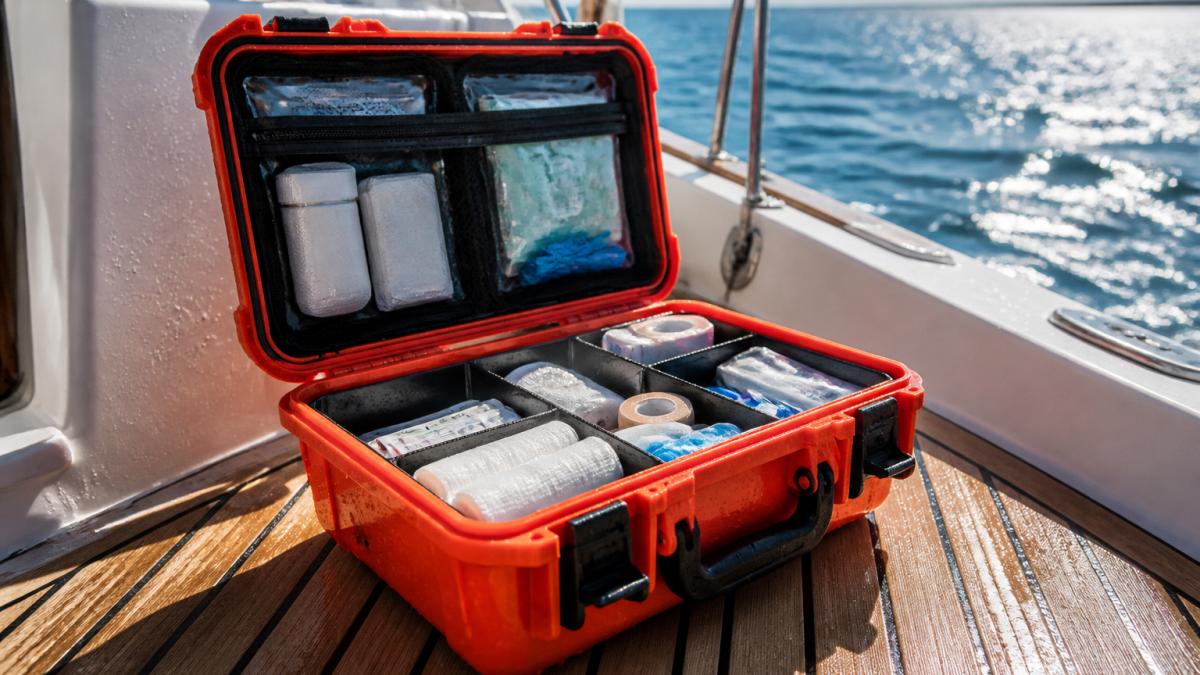
Water-resistant storage and protection from salt spray
A waterproof first aid kit for boats starts with the case. Hard plastic or reinforced polymer shells protect contents from splashes, spray, and humidity, while a water-resistant seal keeps moisture out.
Salt spray corrodes metal instruments and damages paper labels, so marine cases use corrosion-resistant shells, stainless steel components, waterproof labels, and humidity-resistant plasters.
The NAVIGATOR Scale G Marine First Aid Kit features a rigid case with a water-resistant seal, shielding dressings, bandages, and instruments from sea spray and moisture so they stay clean and ready after months on the water.
Crushproof and dustproof case design
Rough seas, engine vibration, and tight lockers subject kits to impacts. A crushproof, rigid case prevents deformation that could damage fragile items like thermometers or eye irrigation bottles.
Dustproof design keeps salt crystals, engine grime, and debris out of dressings, and a secure latch holds the lid tight in heavy weather.
Quick-access layout in rough conditions
When someone is injured on a pitching deck, there is no time to hunt through a disorganised pile. Marine kits use compartments and labelled sections so any crew member can locate items fast.
A logical layout, wound care grouped, eye care separate, bandages by size, means the right item is where you expect it, and reference cards help untrained crew find it under stress.
Marine First Aid Kit Requirements and Compliance
Vessel operators in Australian waters must meet NSCV requirements for onboard first aid (Scale F first aid kit). The standard defines kit contents by vessel class, crew size, and voyage type; compliance is a legal duty for commercial vessels.
NSCV Scale classifications explained
The NSCV uses letter scales (G, F, D, E) to classify marine first aid kits, each matching specific vessel classes and voyage types.

Scale G suits smaller vessels operating in enclosed and inshore waters. Scale F covers mid-range commercial and recreational vessels. Scale D and E are for larger vessels, longer voyages, and higher-risk operations. The Australian Maritime Safety Authority provides official NSCV guidance for vessel operators determining their class and compliance obligations.
Choosing the wrong scale leaves crew unprepared or wastes money.
Choosing a kit by vessel type and crew size
A solo operator on a 6-metre day-fishing boat has different needs than a 12-person charter vessel running week-long trips, so crew size, voyage duration, and vessel type all influence the right scale.
Small boats, day trips, enclosed waters: Scale G offers essential coverage without excess bulk.
Mid-range commercial and recreational vessels: Scale F balances comprehensive coverage with practical onboard space. The NAVIGATOR Scale F Marine First Aid Kit at $339.99 suits fishing boats, charters, and larger private vessels.
Larger vessels, longer voyages, higher-risk work: Scale D and E kits provide maximum preparedness.
Essential Supplies for a Boat First Aid Kit Checklist
Saltwater exposure, sun damage, confined spaces, and delayed medical access shape what supplies matter most.
Wound care and dressings for cuts and abrasions
Cuts from rigging, deck hardware, and fish hooks are common, as are rope-burn abrasions. Seawater accelerates infection if wounds are not cleaned and dressed properly.
Essential supplies include non-adherent dressings, sterile gauze pads in multiple sizes, waterproof adhesive plasters that stay put despite salt spray, conforming bandages, and elastic bandages for sprains.
The NAVIGATOR Scale G Marine First Aid Kit includes wound dressings, bandages, and tapes configured for rapid treatment of cuts, grazes, and minor burns.

Antiseptics and cleaning supplies for marine environments
Seawater is not sterile, so saltwater wounds need thorough cleansing before dressing. Sterile saline irrigates wounds, antiseptic wipes reduce infection risk, and antibacterial cream protects minor cuts.
Tweezers remove splinters, fish spines, or debris, cotton buds assist with eye care, and gloves and masks protect responders treating contaminated wounds.
Burns, sunburn, stings and bites at sea
Engine room work, galley operations, and sun and wind exposure cause burns, while insect stings and sea lice bites occur during coastal work or swimming.
Burn gel cools minor thermal burns, sunburn relief cream reduces inflammation, antihistamines address allergic reactions, and eye wash treats salt irritation common on spray-exposed decks.
The NAVIGATOR Scale F Marine First Aid Kit at $339.99 includes supplies for burns, sunburn, stings, and eye injuries alongside wound care and general essentials.
First Aid Kit for Boating: Navigator Scale Options
PFA Shop stocks four NAVIGATOR marine scales, each aligned with a specific vessel class and operational need.
NAVIGATOR Scale E Marine First Aid Kit 42.8 x 30.4 x 14.6cm →
Navigator Scale G: Compact and affordable option
The NAVIGATOR Scale G Marine First Aid Kit at $282.35 suits small vessels, day trips, and inshore operations, meeting NSCV Scale G requirements for vessel classes 1D, 1E, 2D, 2E, 3D, and 3E.
The kit fits neatly into wheelhouses, galleys, or cabin lockers. A wall-mount bracket keeps it visible and accessible, and the hard case is UV resistant and water sealed, protecting contents from spray and humidity.
Inside, the layout supports quick access to wound care, bandages, antiseptics, and basic instruments for cuts, grazes, minor burns, eye irritation, and sprains.
Navigator Scale F: Mid-range professional coverage
The NAVIGATOR Scale F Marine First Aid Kit at $339.99 bridges compact and comprehensive. It meets NSCV Scale F requirements and suits commercial fishing boats, charter vessels, and larger private boats.
The case is bold and highly visible, easy to locate in low light or rough conditions.
Inside, the kit brings together wound dressings, bandages, tapes, antiseptic products, and medical items for common injuries at sea, laid out for quick identification under pressure.
Navigator Scale D and E: Comprehensive marine solutions
The NAVIGATOR Scale D and Scale E Marine First Aid Kits at $379.99 each provide maximum preparedness for larger vessels, longer voyages, and higher-risk operations.
The case is highly visible, durable, and engineered for harsh marine conditions.
Scale D suits operators seeking comprehensive coverage aligned with marine regulations. Scale E provides the highest preparedness for operators managing multiple boats or fleets, or running extended offshore passages where medical support is distant.
Both scales use the same 42.8 x 30.4 x 14.6 cm case dimensions, balancing internal capacity with practical onboard storage.
Compact Waterproof Kits for Small Boats and Day Trips
Not every boater needs a full marine compliance kit, and waterproof first aid kit boats come in various sizes.
The VOYAGER 2 Series Plastic Waterproof First Aid Kit at $39.99 is a compact, portable solution for personal use and light workplaces.
The RESPONDER 4 Series Plastic Waterproof First Aid Kit at $105.15 suits small teams and semi-outdoor spaces.
Both use waterproof plastic cases that protect contents from dust, moisture, and knocks.
Maintaining Your Marine First Aid Kit: Storage, Restocking and Expiry Checks
Supplies expire, humidity and heat damage contents, and salt air corrodes metal components. Regular maintenance keeps your kit ready.
Protecting contents from heat, humidity and salt exposure
Store your kit in a cool, dry location aboard the vessel, wheelhouses and enclosed cabins beat exposed decks. Avoid direct sunlight; heat degrades plasters' adhesives and reduces the effectiveness of gels and creams.
Salt air corrodes metal instruments and labels. Wipe the case periodically with fresh water and dry it, and check the water-resistant seal for cracks. If moisture gets inside, dry the contents and refresh the seal or replace the kit.
In tropical or coastal climates, store the kit in a sealed container with silica gel packs. Check quarterly that contents are dry and labels legible.
Restocking with refill packs and tracking expiry dates
When supplies are used, replace them promptly. PFA Shop stocks refill packs for each NAVIGATOR scale.
Refill packs are faster and cheaper than replacing the entire kit; the case stays in service and only consumables are replaced.
Check expiry dates at least twice per year.
A waterproof first aid kit for boats is essential safety equipment.
At PFA Shop, we recommend choosing based on vessel type, crew size, and trip duration.
Maintain your kit by protecting it from heat, humidity, and salt exposure. Restock supplies as they are used. Check expiry dates regularly.
Frequently Asked Questions
What should be in a marine first aid kit?
A marine first aid kit should include wound dressings, bandages, antiseptic wipes, cleansing solutions, eye wash, burn gel, gloves, masks, tapes, and basic instruments. The exact contents depend on your vessel type and crew size. Navigator Scale G kits start at $282.35 and include essentials for cuts, grazes, burns and minor injuries. Larger Scale D and E kits ($379.99) add more comprehensive coverage for commercial vessels and longer voyages.
Do I need a first aid kit on my boat?
Yes. Commercial vessels must carry a marine first aid kit compliant with the Australian NSCV (National Standard for Commercial Vessels) for your vessel class. Recreational boats benefit from a waterproof first aid kit for safety and peace of mind. Even small day-trip boats should carry basic supplies in a waterproof case to handle cuts, burns and minor injuries until professional help arrives.
How do I keep a boat first aid kit dry and ready to use?
Store your kit in a UV-resistant, water-resistant case with a secure seal to protect against salt spray and moisture. Position it in a fixed, visible location using a wall-mount bracket so crew can find it quickly. Check contents regularly for expiry dates and water damage. Use refill packs like the Navigator Scale G Refill ($191.15) to restore depleted supplies without replacing the entire case.
What is the difference between waterproof and water-resistant first aid kits for boats?
Waterproof cases provide complete protection against water ingress and are ideal for offshore and exposed conditions. Water-resistant cases shield contents from splashes and general moisture but may not survive full submersion. Marine kits use water-resistant seals and UV-resistant materials to withstand salt spray, sun exposure and humidity without needing to be fully waterproof for most recreational and commercial boating.