
How to Fix a Red AED Status Light
Last Updated: November 5, 2026
Quick Summary
A red AED status light means the device is not ready for use, usually because it failed its self-test. The most common causes are a low or flat battery and expired electrode pads, so check the battery and pad expiry dates first. Most red alerts are consumable problems you can fix with a replacement part, not a broken machine.
- A steady red light usually signals a failed self-test or service-due alert, while a flashing red light often means low battery or a pad problem.
- Most AED batteries carry a stated replacement interval, often around four years, so do not wait for the unit to go completely flat.
- Check pad expiry by opening the carry case, finding the use-by date on the pouch and comparing it to today's date.
- If a red light persists after fitting a fresh battery and new pads, take the unit out of service and contact the manufacturer or an authorised service agent.
- In a cardiac arrest, call emergency services, start CPR and retrieve the red-light unit anyway, since many units still power up and analyse a heart rhythm.
Table of Contents
- What a Red AED Status Light Actually Tells You
- Why AED Status Lights Turn Red: The Common Causes
- When an AED Fails Its Self-Test
- Decoding the AED Low Battery Warning
- How to Tell If Your AED Pads Have Expired
- Your AED Maintenance Checklist for Every Month
- What to Do in an Emergency If the Light Is Red
- Ordering Replacement Pads and Batteries for Your Unit
- Frequently Asked Questions
What a Red AED Status Light Actually Tells You
A red AED status light means the device is not ready for use. It is a warning that something inside the unit needs attention before the defibrillator can be relied on in a cardiac arrest.
That is the short answer. The longer one matters more.
An automated external defibrillator runs its own checks. Most units test their battery, pads and internal circuitry on a set schedule, often daily or weekly. A green or normal readiness indicator means the last self-test passed. A red light, flashing light or warning symbol means it did not.
People often see the red light and assume the worst. Usually it is a battery or pad issue, not a dead machine.
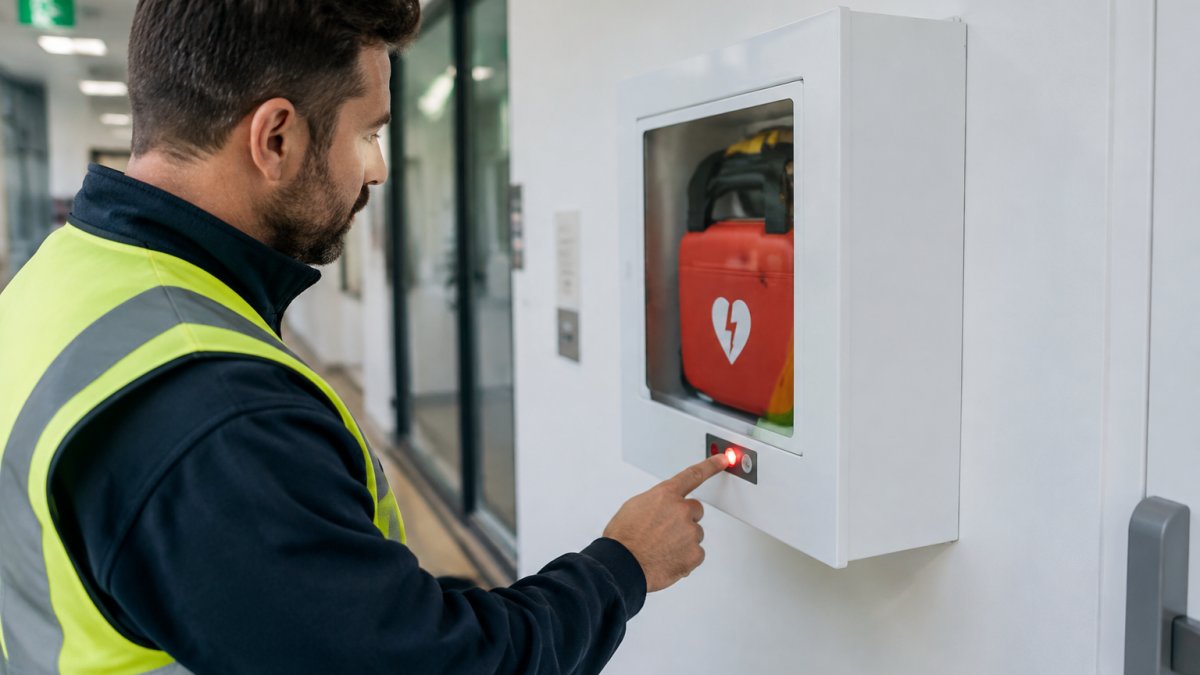
Flashing, Steady and Symbol-Based Warnings
Not every red signal means the same thing.
- Steady red light: usually a failed self-test or a service-due alert
- Flashing red light: often a low battery or a pad problem
- Red symbol or icon: points to a specific fault, such as pads or battery
- Red plus beeping: an active alert you should not ignore
Check your manufacturer's manual for the exact meaning. The same colour can mean different things across brands.
Why AED Status Lights Turn Red: The Common Causes
Most red lights trace back to a short list of causes. The device status has slipped below rescue-ready, and the reason is usually one of these:
- Low or flat battery, the most common cause by far
- Expired electrode pads, pads carry a use-by date
- Failed self-test, the unit detected an internal fault
- Pads not connected properly, a loose lead triggers an alert
- Service interval reached, some units flag routine maintenance
- Temperature or storage issues, extreme conditions can trip a warning
A common mistake is assuming a red light means the AED is broken. In practice, most red alerts are consumable problems you can fix with a replacement part.
Most red lights trace back to a short list of causes, and the reason is usually one of these.
Cause |
What it means |
|---|---|
Low or flat battery |
Most common cause by far |
Expired electrode pads |
Pads carry a use-by date |
Failed self-test |
Unit detected an internal fault |
Pads not connected properly |
A loose lead triggers an alert |
Service interval reached |
Some units flag routine maintenance |
Temperature or storage issues |
Extreme conditions can trip a warning |
When an AED Fails Its Self-Test
A failed self-test means the device ran its internal check and something did not pass. The unit is telling you it cannot confirm it will deliver a shock when needed.
Self-tests are not a single event. Most units run a daily or weekly automatic test of the battery, the electrode pads and the internal circuitry, and some run a more thorough monthly test that includes a partial charge of the capacitor. The readiness indicator reflects the most recent result.
What the self-test actually checks varies by model, but the common elements are:
- Battery capacity and voltage, can the battery still support a full charge cycle?
- Pad presence and connection, are pads seated in the connector and within their use-by date?
- Internal circuitry and capacitor, can the unit charge and deliver a shock?
- Software and memory, is the operating firmware intact?
A persistent failed self-test is different from an intermittent one. If the red light clears after you replace the battery or pads and run a manual test, the fault was consumable-related.
Watch out: do not assume a red light after a failed self-test means the device is dead. A common pattern is a battery that passes voltage checks but cannot hold enough charge to complete the capacitor test, the unit flags a failure even though the battery looks fine on a simple meter.
If your unit shows a persistent failed self-test after you have replaced the battery and pads, contact the manufacturer or an authorised service agent. Do not keep using a device that will not clear. Record the date, the indicator state and what you replaced, because service agents will ask for that history before they will diagnose the unit.
Decoding the AED Low Battery Warning
The AED low battery warning is the alert you will see most often. It usually appears as a flashing red light, a battery icon, or a beep at set intervals.
Batteries have a shelf life even when the unit sits idle. Most AED batteries carry a stated replacement interval, often around four years. Some last longer, some shorter.
Do not wait for the unit to go completely flat. A flat battery means no shock, and no shock means no chance.
If you run a Cardiac Science Powerheart G3, the Cardiac Science Powerheart G3 Battery is designed for the G3 9300E, 9300A, 9390E and 9390A models shipped after April 12, 2004.

Watch out: fitting a generic or wrong-model battery can leave the unit unable to complete its self-test, so match the part to your exact model number.
LIFEPAK CR2 Replacement Electrode Kit (4 Year Life) →
How to Tell If Your AED Pads Have Expired
AED pads expired is one of the easiest faults to miss. The pads sit sealed in the unit, so nobody looks at them until the light turns red.
Every set of electrode pads carries an expiration date. Once that date passes, the gel can dry out and the pads may not stick or conduct properly.
Here is how to check:
- Open the AED carry case and remove the pad pouch
- Find the use-by date printed on the pouch
- Compare it to today's date
- Check the connector is firmly seated
- Replace the whole set if the date has passed
Once you confirm the pads are expired, order the matching set. For Powerheart G3 units, the Cardiac Science Powerheart G3 Pads are the correct replacement.

Your AED Maintenance Checklist for Every Month
A short monthly check keeps the status light green and the unit rescue-ready. It takes a few minutes.
- Confirm the status indicator shows ready
- Check the battery indicator or expiry date
- Check the pad expiry dates
- Confirm pads and leads are connected
- Look for damage to the case and cables
- Confirm the AED sign is visible and clear
- Record the check date and result
Write it down. A documented log proves the unit was inspected and helps you spot patterns, like a battery that keeps draining.
For a fuller routine, our workplace AED compliance checklist covers the wider requirements so nothing slips through.
What to Do in an Emergency If the Light Is Red
This is the part that matters most. If someone is in cardiac arrest and the AED shows a red light, do not walk away and do not delay CPR to troubleshoot the device.
The priority order is fixed:
- Call emergency services immediately on Triple Zero (000).
- Start CPR on the person right away.
- Send someone to find another AED if one is nearby.
- Retrieve the red-light unit anyway and open it.
- Follow the voice prompts if the device powers on and instructs you.
Many units will still power up and analyse a heart rhythm even with a warning light. A red light usually reflects a failed self-test or a consumable issue, not a dead device. If the unit powers on, delivers prompts and advises a shock, use it. If it will not start, keep doing CPR until help arrives.
What most guides miss is that behaviour in an emergency is model-specific. Some units lock out entirely when a pad or battery fault is detected; others will run an analysis but refuse to charge. The only reliable way to know how your unit behaves is to read the manual before an emergency, not during one.
Watch out: never open the device casing, remove the battery while the unit is on, or attempt a reset during an active rescue. These actions can interrupt the rhythm analysis and waste critical seconds. If the unit will not start, return to CPR immediately.
Make sure responders can find a working unit fast. Clear signage helps, and the Cardiact Poly AED Sign marks the location plainly. If your AED is out of service, an alarmed AED cabinet with strobe light helps staff locate a working device quickly.

Ordering Replacement Pads and Batteries for Your Unit
The fastest fix for most red lights is a replacement part. Match the part to your model, and keep a spare set on hand.
We stock consumables for common public-access units, including the LIFEPAK CR2 electrode kit and battery kit, each with a four-year life. Budget for replacement parts as a routine cost, not an emergency one.
Check your model number before you order. Fit the wrong part and the unit may not clear its self-test.
Frequently Asked Questions
Can I use an AED if its status light is red?
In a cardiac arrest, use the AED anyway and follow its voice prompts. A red light usually signals a maintenance issue such as a low battery or expired pads rather than a device that cannot deliver a shock. Turn the unit on, attach the electrode pads as instructed and let the device analyse the heart rhythm. If it prompts you to deliver a shock, do so. Call emergency services on 000 first and keep CPR going while the AED is being set up.
What should I check when an AED fails its self-test?
Start with the consumables. Open the lid and confirm the electrode pads are within their expiry date, then check the battery indicator and any displayed fault code. Look for a pad connector that has worked loose or a battery seated incorrectly. Write down the date, the warning shown and what you checked. If the fault clears after replacing pads or battery, run a manual self-test where the model allows it. If the red light returns, take the unit out of service and contact the manufacturer's service line.
How do I know whether my AED pads have expired?
Every electrode pad packet carries an expiry date, usually printed on the foil pouch and on the connector. Check it during your monthly inspection and record the date in your maintenance log. Pads typically last two to four years from manufacture, so set a calendar reminder roughly a month before expiry. Replace pads before the date, not after, because dried adhesive can fail to stick to a sweaty or hairy chest. A LIFEPAK CR2 replacement electrode kit, for example, carries a four-year life.
What should I do if the AED status light stays red after troubleshooting?
Stop relying on the unit for rescue readiness. Remove it from its cabinet, label it clearly as out of service and store it somewhere it cannot be grabbed in an emergency. Record the fault in your maintenance log and contact the manufacturer or your supplier for service. Arrange a loan or replacement unit so your workplace or venue stays covered under your first aid arrangements. Do not keep resetting the device to clear the warning without fixing the underlying cause.
A red status light is a warning, not a death sentence for your defibrillator. Most units come back to rescue-ready with a fresh battery or a new set of pads. At PFA Shop, we stock the consumables and accessories that keep your AED ready, from replacement batteries and electrode pads to cabinets and signage. Get started with PFA Shop and keep your unit rescue-ready all year.
