
Best Marine First Aid Kit Features: 2026 Guide
Table of Contents
- What Makes a Marine First Aid Kit Different From Standard First Aid
- Essential Marine First Aid Kit Contents and Wound Care Supplies
- Waterproof First Aid Kit for Boating: Case Design and Storage Performance
- Marine Medical Kit Checklist: Injury Risks Specific to Boating and Fishing
- How to Maintain a Boat First Aid Kit: Expiry Checks and Restocking
- Comparing Marine First Aid Kit Options by Vessel and Trip Duration
- Feature Comparison Table: NAVIGATOR Marine Kits at a Glance
- How to Choose the Right Marine First Aid Kit for Your Vessel and Crew
- Frequently Asked Questions
Last Updated: October 12, 2026
What Makes a Marine First Aid Kit Different From Standard First Aid
Marine first aid kit features are purpose-built for the hazards and constraints of life on the water. Unlike a standard home or vehicle kit, it accounts for salt spray, high humidity, limited access to medical help, and injuries unique to boating and fishing.

The core difference comes down to three factors: waterproofing, injury scope, and compliance. Standard kits focus on minor cuts and sprains.
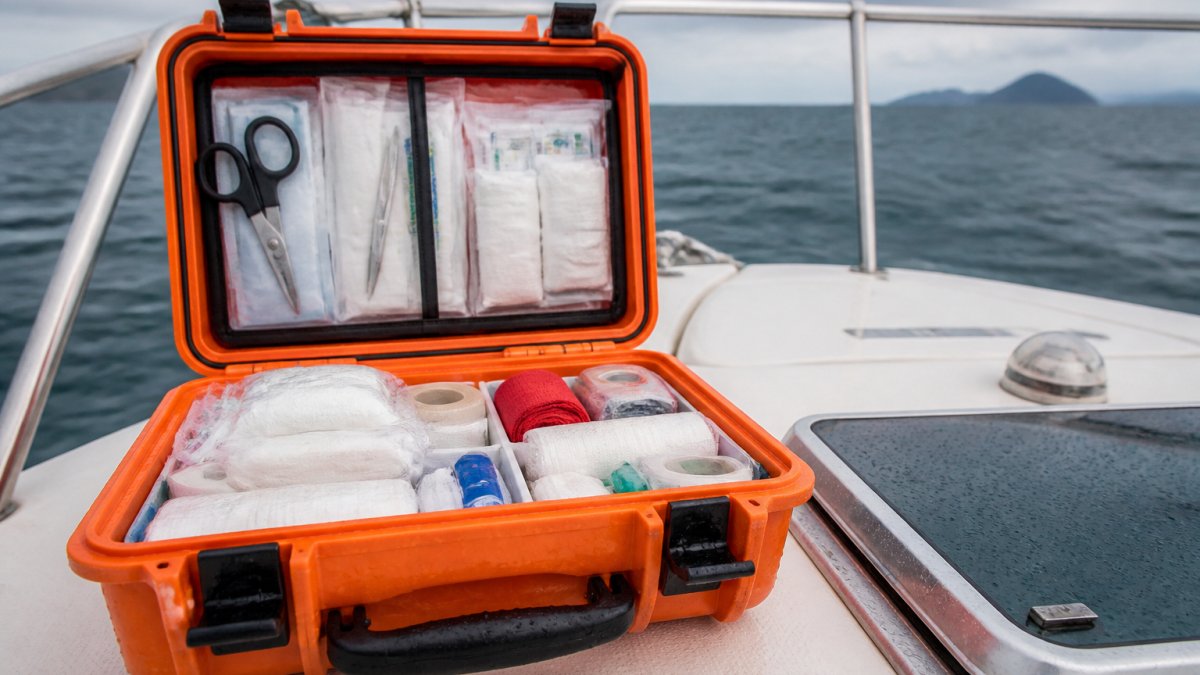
Australian maritime regulations recognise this distinction. The NSCV (National Standard for Commercial Vessels) specifies minimum first aid kit requirements based on vessel class, distance from shore, and crew size (Scale F first aid kit).
At PFA Shop, we stock marine first aid kits that meet these standards. The NAVIGATOR range aligns with NSCV requirements across multiple vessel classes.
Essential Marine First Aid Kit Contents and Wound Care Supplies
Marine first aid kit features reflect the injuries most likely to occur on boats and the constraints of treating them at sea. Wound care dominates because cuts, grazes, and puncture wounds are common when working with ropes, fishing equipment, and sharp surfaces in confined spaces.
A comprehensive marine kit includes adhesive bandages and dressing strips for minor cuts, gauze pads and roller bandages for larger wounds, elastic bandages for sprains and strains, and antiseptic wipes and ointment to prevent infection. Sterile eye pads address salt-water irritation and foreign bodies.
Supporting items matter as much as wound care. Gloves and CPR barriers reduce contamination in tight quarters, cold packs manage swelling, a compact torch and whistle support rescue signalling, and an emergency blanket addresses hypothermia, which progresses quickly in cold water and can be fatal if untreated.
The NAVIGATOR Scale G Marine First Aid Kit, priced at $282.35, includes these essentials in a compact, waterproof case suitable for smaller recreational vessels and inshore operations. For larger crews or longer voyages, the NAVIGATOR Scale F at $339.99 expands coverage with additional dressings, bandages, and protective items.
Waterproof First Aid Kit for Boating: Case Design and Storage Performance
The case itself is the first line of defence. A waterproof marine first aid kit case must seal against spray and splashes without complex maintenance, resist UV degradation, and survive the bumps and vibration of working at sea.
Hard cases outperform soft bags for marine use. They protect contents from crushing and impact, hold their shape in confined storage, and provide a rigid surface for wall mounting. The NAVIGATOR kits use hard cases with UV-resistant shells and water-resistant seals that protect against splashes and general moisture.
Case dimensions matter for practical storage. The NAVIGATOR kits measure 42.8 x 30.4 x 14.6 cm, balancing generous internal capacity with a compact footprint that fits wheelhouses, galleys, or cabin lockers.
The case design also supports visibility. A brightly coloured exterior helps crew locate the kit quickly in low light or stressful situations, while clear internal organisation grouped by function and labelled compartments reduce response time when treating an injury.
Marine Medical Kit Checklist: Injury Risks Specific to Boating and Fishing
Marine environments create specific injury patterns that land-based first aid kits don't anticipate. Understanding these risks shapes what belongs in your kit.
Fishhook injuries are nearly unique to boating and fishing. A barbed hook embedded in skin requires careful removal, pulling straight out often causes tissue damage.
Burns and scalds occur frequently on boats. Hot water from galleys, steam from engines, and contact with hot surfaces cause injury in confined spaces where medical help is hours away.
Hypothermia develops faster in water than on land, even in temperate climates. An emergency blanket can prevent progression while you contact rescue services.
Eye injuries from salt spray, sun reflection, or foreign objects are common on open water. Sterile eye pads and irrigation solutions address these without introducing infection.
Cuts and grazes from ropes, fishing line, and deck equipment are everyday occurrences. Infection risk is high in the damp, salty marine environment. Antiseptic wipes and dressing strips prevent minor wounds from becoming serious.
How to Maintain a Boat First Aid Kit: Expiry Checks and Restocking
A well-stocked kit loses value if supplies expire or deplete unused. Marine environments accelerate degradation, so maintenance is more frequent than for home kits.
Check your kit every six months. Inspect the case for cracks or seal damage, and review all consumables, antiseptic wipes, ointments, adhesive bandages, and dressings for expiry dates. Salt spray and UV exposure shorten shelf life. Replace anything past its date or showing degradation (discolouration, hardening, leakage).
After using the kit to treat an injury, restock immediately. A depleted kit is useless in the next emergency. PFA Shop stocks refill packs for each NAVIGATOR scale, so restocking takes one order instead of sourcing individual items.

Document your checks. A simple log, date, items checked, items replaced, helps you track patterns and plan ahead.
For commercial vessels, maintenance records support compliance documentation. Auditors expect to see evidence that kits are regularly inspected and restocked. A documented maintenance schedule demonstrates due diligence.
NAVIGATOR Scale E Marine First Aid Kit 42.8 x 30.4 x 14.6cm →
Comparing Marine First Aid Kit Options by Vessel and Trip Duration
Choosing the right marine first aid kit depends on three variables: vessel type and size, distance from medical help, and crew experience level. The NAVIGATOR range scales across these factors.
NAVIGATOR Scale G: Compact and Affordable for Recreational Boating
The Scale G kit at $282.35 suits smaller recreational vessels, inshore operations, and day trips where medical help is never more than an hour away. It includes essential wound care, basic instruments, and protective items, enough to manage common injuries and stabilise serious ones until rescue arrives.
This kit aligns with NSCV Scale G requirements for smaller commercial vessels and recreational boats operating in enclosed and inshore waters. The compact size fits easily into a cabin locker or under a seat, providing solid coverage without excess weight or cost.
The Scale G Refill at $191.15 keeps the kit current with minimal investment. Many recreational boaters use this option: buy the full kit once, then refresh consumables annually or after each use.
NAVIGATOR Scale F: Mid-Range Coverage for Coastal and Offshore Vessels
The Scale F kit at $339.99 expands coverage for larger recreational boats, coastal cruising, and charter operations where medical help may be 4-8 hours away. It includes everything in the Scale G plus additional dressings, bandages, and protective items for a wider range of injuries and longer response times.
This kit meets NSCV Scale F requirements for commercial passenger vessels, fishing boats, and workboats. For serious recreational users or small commercial operators, it is often the best balance of preparedness and cost.
The Scale F Refill at $257.05 restocks the kit efficiently. Charter operators and active fishing crews often use this option multiple times per season, so the refill format saves money compared to replacing the entire kit.
NAVIGATOR Scale D and E: Comprehensive Kits for Commercial and Serious Recreational Use
The Scale D and Scale E kits, both priced at $379.99, provide comprehensive coverage for commercial vessels, long offshore passages, and serious recreational users who want professional-grade preparedness. They include extensive wound care, multiple sizes of dressings and bandages, advanced instruments, and support items for treating serious injuries until professional help is available.

Scale D aligns with NSCV requirements for larger commercial vessels and offshore operations. Scale E suits commercial and recreational vessels requiring higher preparedness levels. Both are suitable for workboats, fishing vessels, tourism craft, and private boats cruising offshore.
The Scale D Refill at $282.25 and Scale E Refill at $270.70 maintain these kits efficiently. Commercial operators and active charter skippers often restock twice annually or after significant incidents.
Feature Comparison Table: NAVIGATOR Marine Kits at a Glance
Kit |
Price |
Best For |
Case Size |
NSCV Alignment |
Refill Cost |
|---|---|---|---|---|---|
Scale G |
$282.35 |
Recreational, inshore, day trips |
42.8 x 30.4 x 14.6 cm |
Classes 1D-3E |
$191.15 |
$339.99 |
Coastal cruising, charter, mid-range vessels |
42.8 x 30.4 x 14.6 cm |
Specified classes |
$257.05 |
|
Scale D |
$379.99 |
Commercial workboats, offshore |
42.8 x 30.4 x 14.6 cm |
Specified classes |
$282.25 |
Scale E |
$379.99 |
Commercial and serious recreational offshore |
42.8 x 30.4 x 14.6 cm |
Specified classes |
$270.70 |
All NAVIGATOR kits feature UV-resistant hard cases with water-resistant seals, wall-mount brackets, and organised layouts for quick access. The difference is capacity: Scale G handles everyday injuries on small boats; Scale F adds coverage for longer trips; Scale D and E provide comprehensive resources for commercial and offshore operations.
How to Choose the Right Marine First Aid Kit for Your Vessel and Crew
Start with three questions: How far from medical help will you operate? How many people are on board? What's your crew's first aid training level?
Distance from help is the primary driver.
Crew size and experience matter because larger crews need more consumables and mixed experience levels require clear organisation. A trained first aider can make do with fewer supplies.
Vessel type determines what fits. A small recreational kayak or dinghy can't carry a Scale D kit; a commercial fishing boat should. The NAVIGATOR range scales across these constraints.
Budget is a factor, but it shouldn't override preparedness. Refill costs are modest compared to the cost of inadequate care in an emergency.
For most recreational boaters operating within a few hours of shore, the Scale G or Scale F kit provides solid coverage at reasonable cost.
Choosing the right marine first aid kit isn't about buying the biggest or most expensive option.
Frequently Asked Questions
What should a marine first aid kit contain?
A marine first aid kit must include wound care supplies (adhesive bandages, gauze pads, dressing strips), antiseptic wipes and ointment, elastic and roller bandages, sterile eye pads, emergency blankets, cold packs, scissors, tweezers, gloves, and a CPR barrier. Marine-specific kits like the NAVIGATOR range add items for burns, hypothermia, and fishhook removal. Contents vary by vessel class and trip duration; larger commercial vessels require more comprehensive supplies than recreational boats.
Does a marine first aid kit need to be waterproof?
Yes. A waterproof case is essential for boating because salt spray, rain, and moisture can damage medical supplies and render them unusable in an emergency. Quality marine kits feature water-resistant seals and UV-resistant hard cases to protect contents from splashes, humidity, and sun exposure. The NAVIGATOR kits use durable cases with water-resistant seals designed specifically for harsh marine environments.
How do I choose the right marine first aid kit for my boat?
Consider vessel type (recreational, commercial fishing, passenger), crew size, distance from medical aid, and voyage duration. NSCV Scale G suits smaller recreational boats and inshore trips (from $282.35). Scale F handles coastal and charter operations ($339.99). Scales D and E provide comprehensive coverage for commercial vessels and serious recreational users ($379.99). Match the kit scale to your vessel class and typical operating area to ensure compliance and appropriate preparedness.
How often should I check and replace items in a marine first aid kit?
Inspect your kit every 6 months or after each use. Check expiry dates on medications, antiseptics, and sterile items. Replace used supplies immediately and any items showing signs of water damage or deterioration. Keep a maintenance log to track inspections and restocking. Refill kits like the NAVIGATOR Scale D ($282.25), F ($257.05), and G ($191.15) make it easy to restore depleted supplies without buying a new case.
What first aid supplies are most important for boating injuries?
Boating injuries often involve cuts, lacerations, and burns from hot surfaces or steam. Prioritise wound dressings, gauze pads, adhesive bandages, and antiseptic wipes for bleeding control. Include sterile eye pads for salt-water irritation, emergency blankets for hypothermia, and cold packs for minor burns. Marine kits also include gloves and CPR barriers for safe treatment in confined spaces.